

Choosing the right pot for your Monstera deliciosa is essential for healthy growth. The right pot not only supports your plant physically but also influences watering, root health, and overall growth. Here’s what to consider when selecting the perfect Monstera pot.
1. Size of the Pot
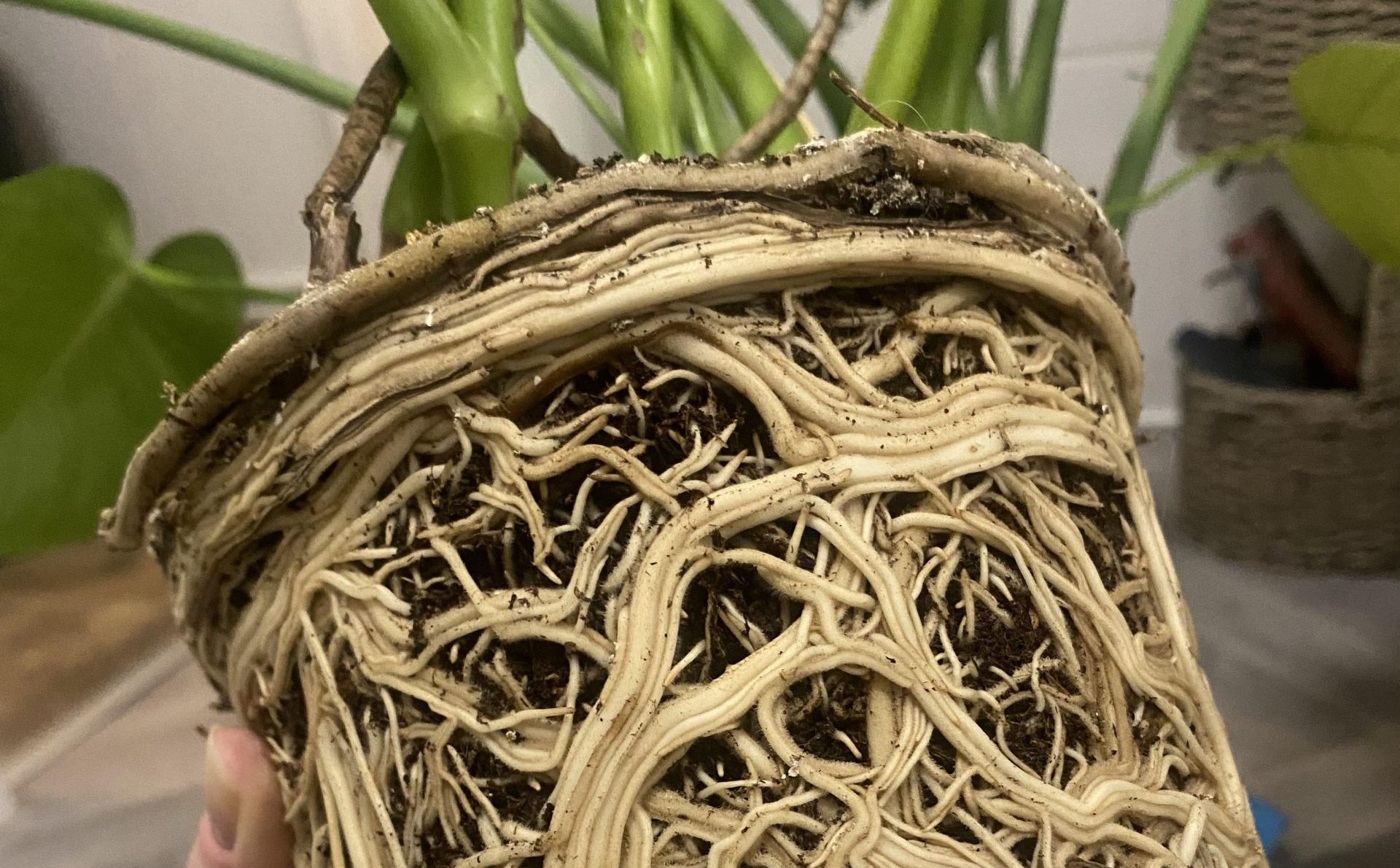
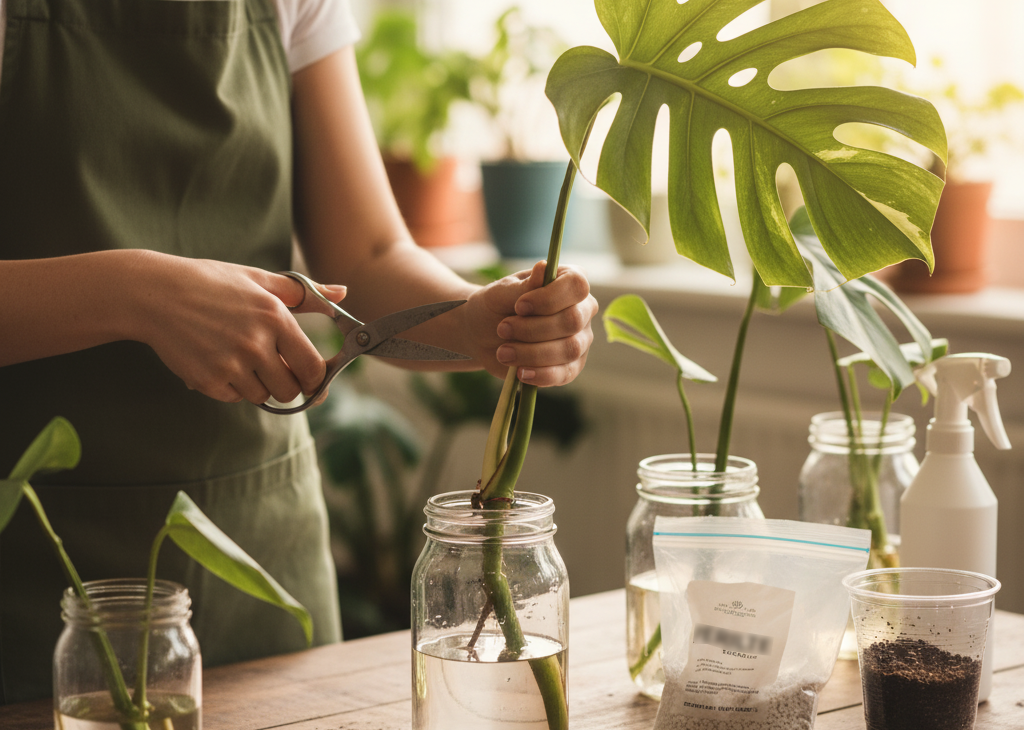
The size of your Monstera’s pot is crucial. When repotting, go up only one pot size at a time. For example, if your plant is in a 6-inch pot, move it to an 8-inch pot.
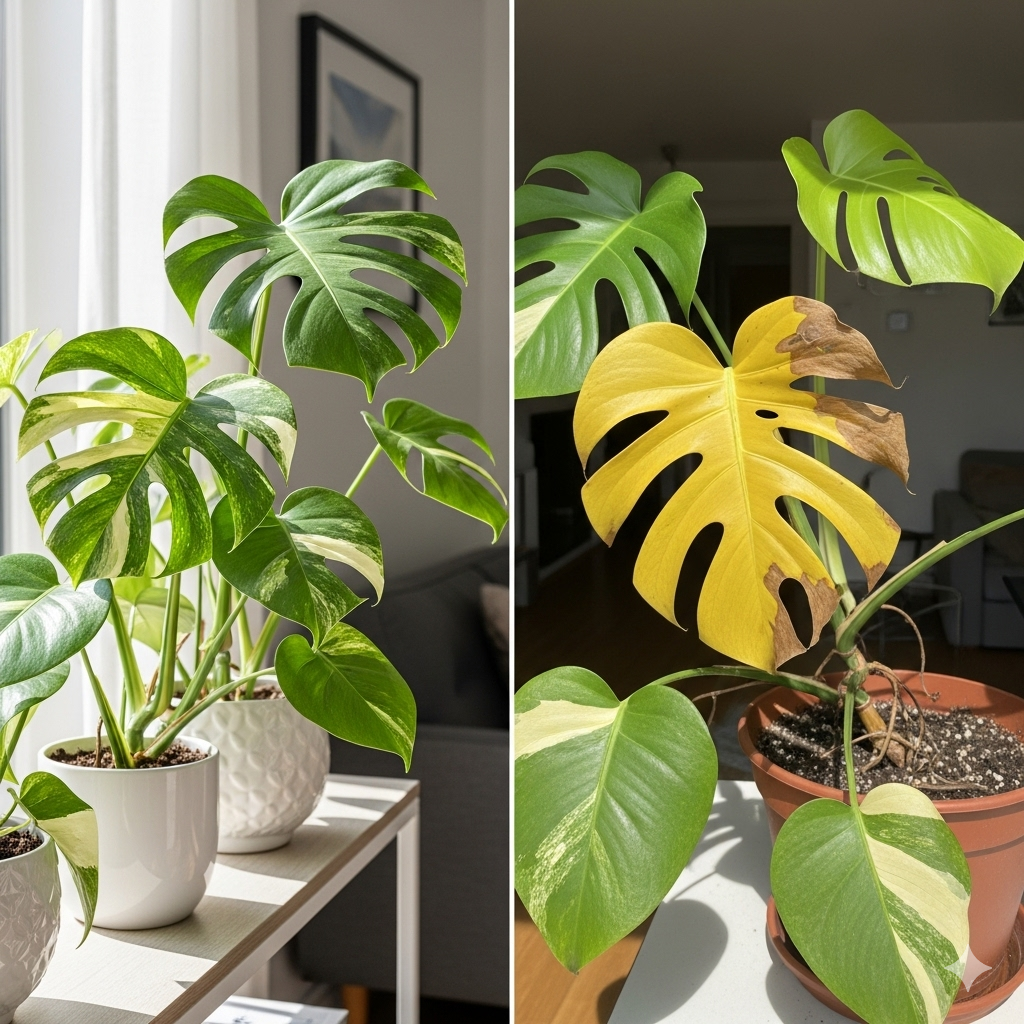
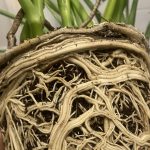
Why not go bigger? Too much soil can retain excess moisture and increase the risk of root rot, especially if the plant isn’t getting enough light. A slightly smaller, well-draining pot is usually better than an oversized one.
2. Weight of the Pot
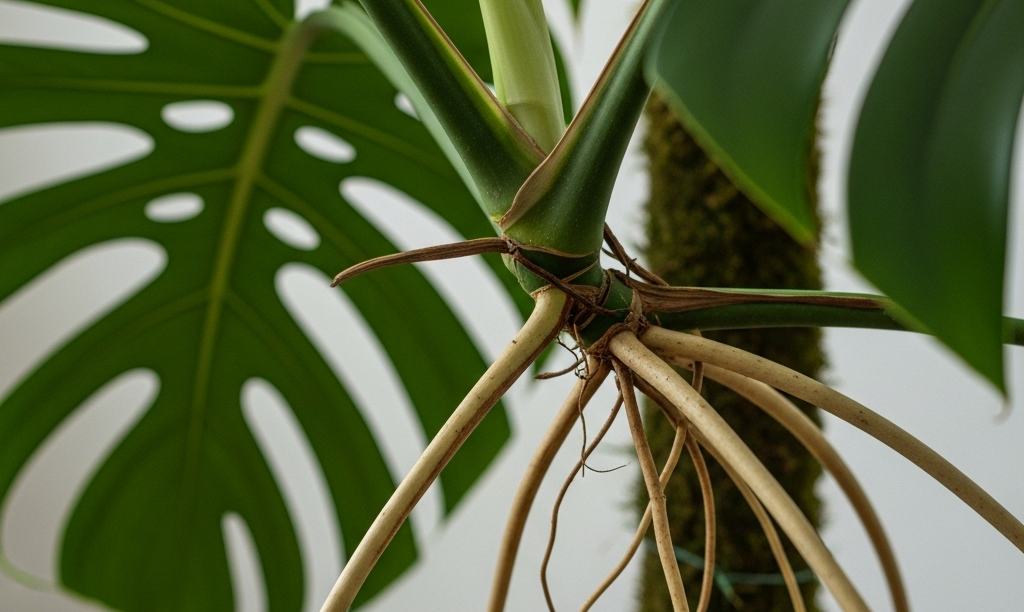
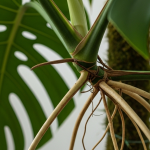
The weight of the pot becomes more important as your Monstera grows. Monsteras are vining plants that often require supports like moss poles or bamboo tripods.
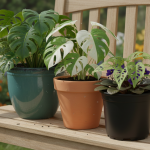
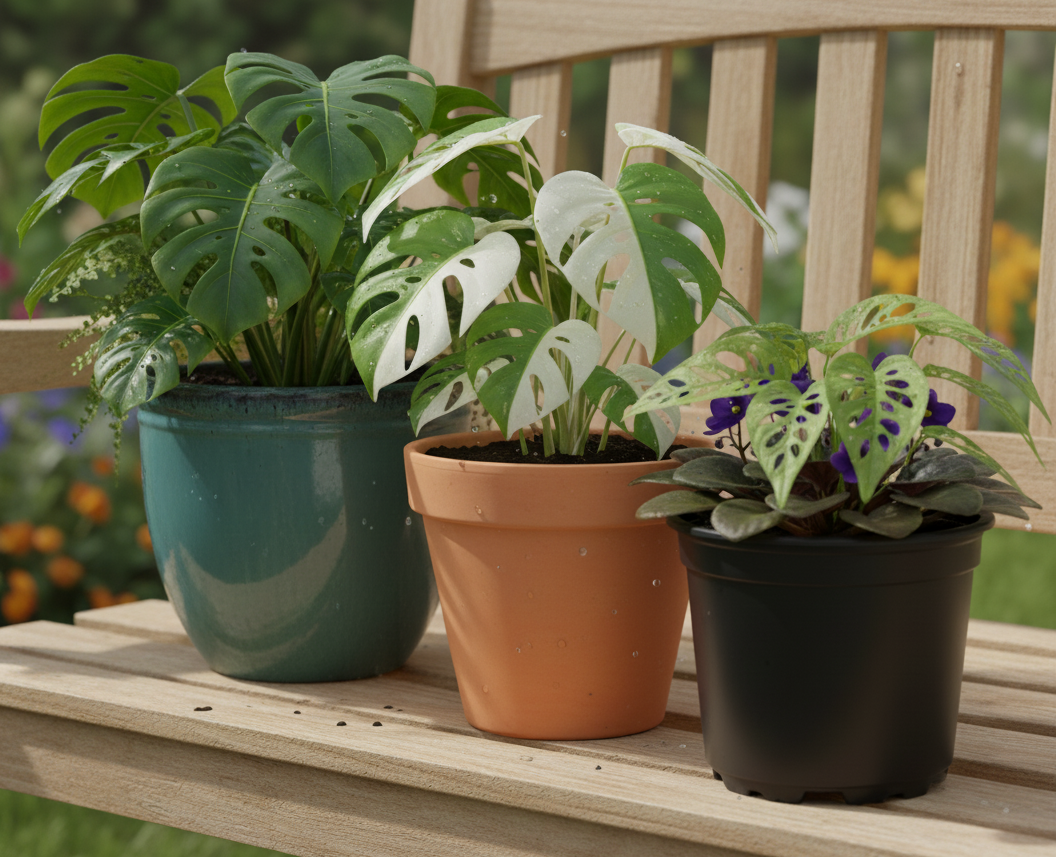
- Heavier pots (terra cotta or glazed ceramic) provide stability and prevent top-heavy plants from tipping over.
- Lightweight pots (plastic) work fine for smaller plants but may be unstable for larger, supported Monsteras.
3. Pot Construction & Implications on Moisture
The type of pot affects how the soil dries and how often you’ll need to water.
Plastic Pots
- Great for small or young Monsteras.
- Retains moisture longer since it’s not porous.
- Easy to move and repot.
Unglazed Terra Cotta
- Porous material dries out quickly, helping prevent overwatering.
- May require more frequent watering for large plants.
- Can develop a natural patina over time from mineral buildup.
Glazed Ceramic or Clay
- Heavy and stable, ideal for large plants.
- Retains more moisture than terra cotta, reducing watering frequency.
- Can be difficult to move; using a wheeled plant stand is recommended.
Pots with Attached Saucers
- Often drain slowly and can cause water to accumulate.
- For large pots, consider using a separate saucer and removing excess water after watering.
Self-Watering Pots
- Not generally recommended for Monsteras, which prefer to dry slightly between waterings.
- Can work with chunky, fast-draining soil, but are often unnecessary and require frequent repotting as the plant grows.
4. Drainage
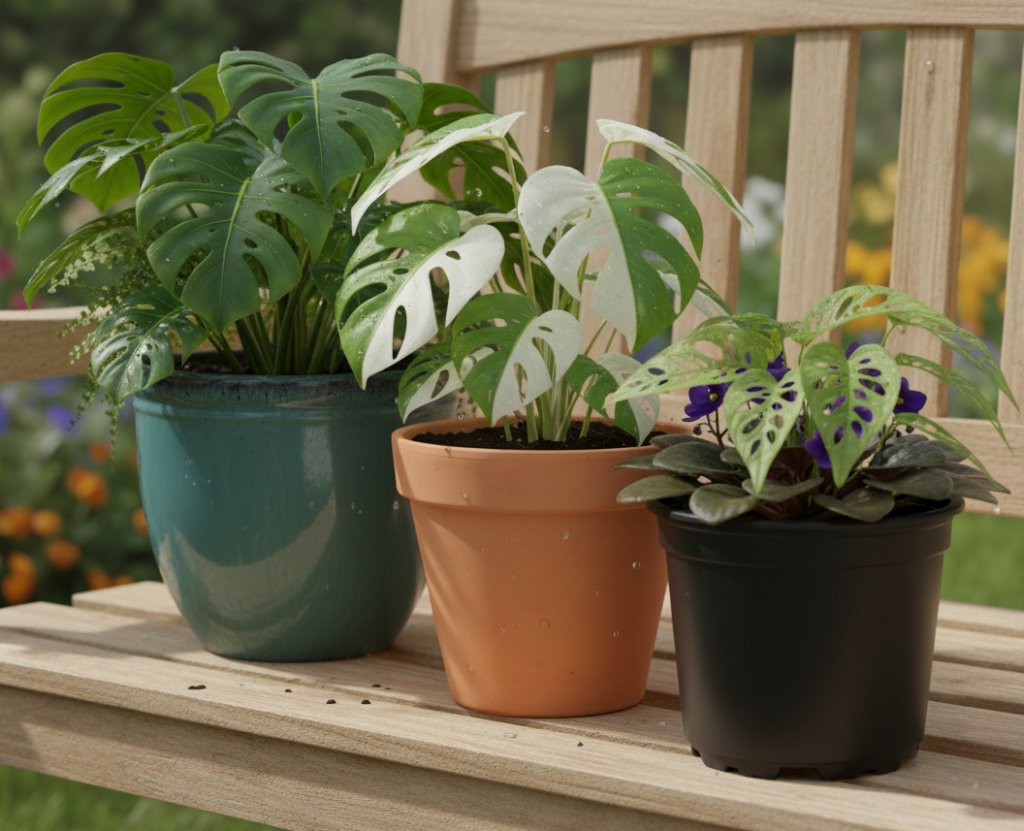
All Monstera pots must have drainage holes. Without them, water can accumulate at the bottom, causing root rot and damaging the plant’s roots. The pot type, size, and drainage are all critical factors in maintaining healthy Monstera growth.
Final Tips
When choosing a Monstera pot, consider size, weight, material, and drainage carefully. A properly chosen pot, combined with good soil, light, and watering habits, ensures your Monstera thrives and grows strong, healthy leaves for years to come.